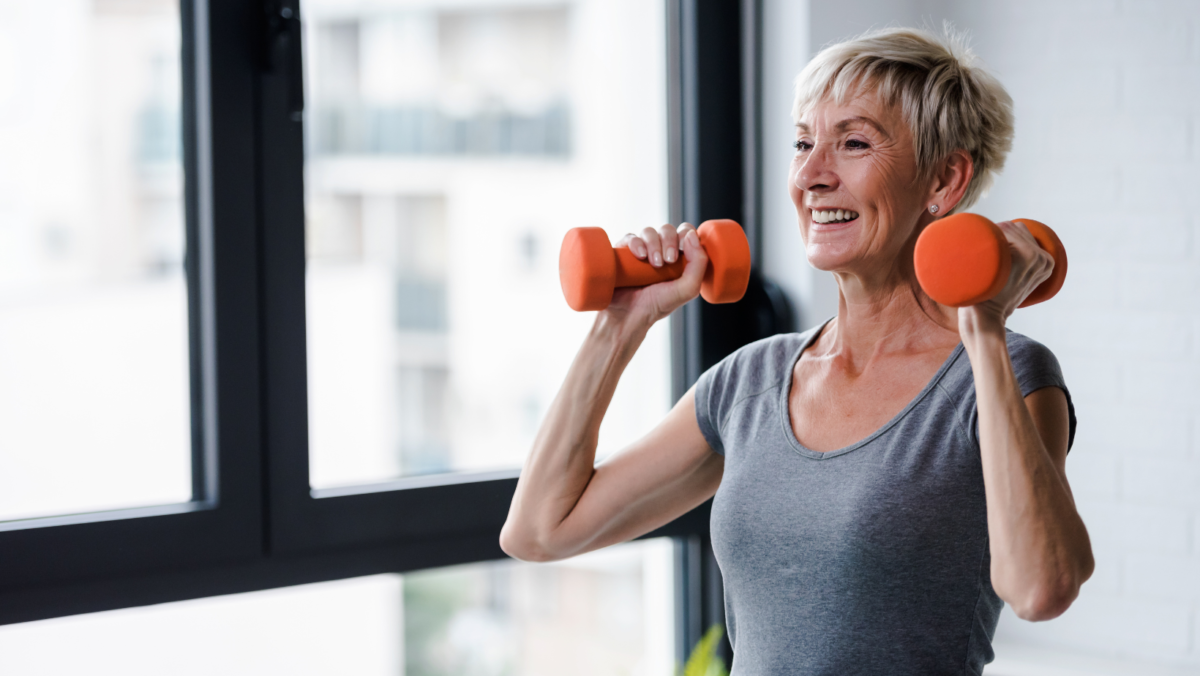
Osteoporosis is a condition characterised by low bone mass and structural deterioration of bone tissue, increasing the risk of fractures. Exercise plays a vital role in managing osteoporosis, but not all forms of activity are equally effective. Some widely prescribed exercises like walking or vibration therapy lack strong evidence for improving bone density, while higher intensity resistance training and impact training programs have been shown to produce meaningful benefits.
In this article, we explain which exercises are most effective, why they work, and what the research—particularly the LIFTMOR trials—reveals about exercise prescription for osteoporosis.
Why Exercise Matters for Bone Health
Bones respond to mechanical stress: when muscles pull on bone during activity, it stimulates bone formation. This principle—rooted in Wolff’s Law—means that specific types of loading can help increase or slow the loss of bone mineral density (BMD). (International Osteoporosis Foundation)
However, not all exercise modalities provide sufficient load to trigger beneficial bone adaptation. The type, intensity, and direction of the load matter.
What are the Best Exercises for Osteoporosis – What does the evidence say?
The LIFTMOR Trial: What It Showed
One of the most compelling pieces of research on exercise for osteoporosis is the LIFTMOR (Lifting Intervention For Training Muscle and Osteoporosis Rehabilitation) trial. This high-quality randomized controlled trial investigated high-intensity resistance and impact training (HiRIT) in postmenopausal women with low bone mass and osteoporosis. This trial was the first in history to demonstrate AN INCREASE in bone density after 8 months of training.
Key findings included:
- Participants doing HiRIT twice weekly experienced significant improvements in bone mineral density at the spine and femoral neck compared to a low-intensity control group. (PubMed)
- The improvements were clinically meaningful, with about ~4% increases in lumbar spine BMD over 8 months, compared with losses in the control group.
- Importantly, in this supervised setting, no serious adverse events were reported, challenging the belief that high-intensity exercise is unsafe for people with osteoporosis. (PubMed)
An extension of this research (the LIFTMOR-M trial) explored similar interventions in men with low bone mass, which also demonstrated increases in bone density, further broadening the evidence base. (PubMed)
What exercises were included in the trial program?
The HiRIT program applies high-magnitude and high-rate mechanical strains, which are powerful stimuli for bone remodelling. It’s not just about the exercise, but more about how much load is transmitted through the bones during the exercise. The loads need to be significantly heavy enough (80% of maximum effort) to elicit changes in bone density.
- High-magnitude resistance exercises include:
- Deadlifts
- Squats
- Overhead Press
- Controlled impact loading include:
- Jumping and Landing exercises
What does a sample program look like?
Whilst everyone will start at a different level, depending in their build, strength levels and training history, the basic program looks like this:
- Frequency: 2 days per week
- Instensity: 80% of 1 rep max (except for jumping and landing exercises which are bodyweight only)
- Exercises
- Squats 5×5
- Deadlifts 5×5
- Overhead press 5×5
- Jump and land 5×5
What Doesn’t Work (or Is Less Effective)
Not all activities commonly recommended for general health are effective for increasing bone density:
Walking
While walking is excellent for cardiovascular health, research shows it does not reliably improve bone mass in people with osteoporosis. At best, walking may slow bone loss, but it doesn’t produce meaningful increases in BMD.
Vibration Therapy
Despite popular interest, whole-body vibration therapy lacks strong evidence as an effective method to improve bone density in osteoporosis. Most benefits attributed to bone health from vibration plates come from low-quality studies or are theoretical, and they do not match the osteogenic stimulus of targeted resistance or impact exercise. Evidence consensus across clinical guidelines remains limited.
Is it safe to exercise and lift weights with osteoporosis?
Yes. It is normal to be a little concerned about lifting weights when you have never done it before. Both Liftmor trials demonstrated excellent safety throughout the 8-month programs. In the original trial of 2017, there was only one participant who suffered a simple back strain that prevented her from exercising for just one week and not one serious adverse event. The participant was able to return and complete the rest of the program safely.
Putting It Into Practice: Safe & Effective Exercise Recommendations for improving bone density
While high-intensity training shows the best evidence for bone adaptation, safety is paramount—particularly for older adults with osteoporosis.
Exercise Principles to Follow
- Supervision by a qualified physiotherapist or exercise professional
- Progressive resistance training using weights that challenge but do not compromise form
- Impact activities that are controlled and appropriate
- Balance and functional training to reduce falls risk
- Individualisation based on fitness, fracture history, and other health conditions
Low-intensity activities (like gentle walking) are still beneficial for general health and mobility, but they should be just one part of a broader exercise program if the goal is to improve bone strength.
Take-Home Message
When it comes to managing osteoporosis through exercise:
✅ High-intensity resistance and impact training — as used in the LIFTMOR trials — has the strongest evidence for improving bone density and strength.
❌ Walking and vibration therapy are not sufficient as primary strategies to increase bone mass.
For those with osteoporosis, especially older adults, working with trained professionals to design a safe, supervised exercise program is key to maximising bone health and reducing fracture risk.
Want to know more?
If you are interested to know more about what the program entails, head over to our “Strong Bones” page for more information.
You can also check out the latest trial being conducted by Griffith University, called the STOP FRACTURE Trial.